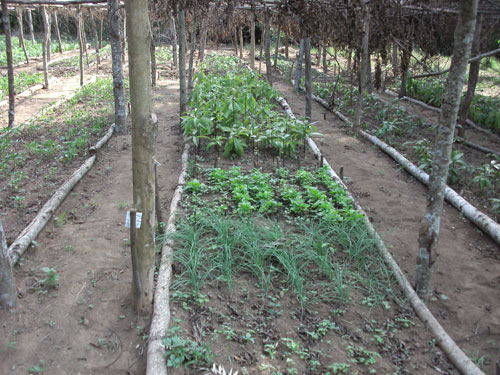
Agriculture Projects
Creating Colleges of Organic Agriculture and Sustainable Living
Model of a Typical Project
- Academic — a Consciousness-Based secondary school or college, teaching a standard curriculum in organic agriculture, entrepreneurship, and management.
- Business Incubator — an environment within the school or college where students plan and develop their own businesses with guidance from faculty.
- Mini-Industrial Area — a part of the physical site for the academic institution where graduates of the academic programmes may implement their enterprise development plans.
An important part of each project can be the development of agri-business enterprises by the project itself, to help with start-up expenses and contribute to the financial self-sufficiency of the project as it matures.
Examples of Projects in Start-up Phase
Togo: École Togolaise de l’Agriculture et du Développement Durable
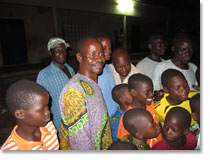
On 100 hectares to be donated by local citizens, the plan is to create a secondary school and a tertiary institution together with an industrial park. The secondary school would teach the standard academic curriculum, with an option for vocational organic agriculture and elementary business skills.
The college would specialize in sustainable agriculture, business, entrepreneurship, and sustainable living skills. It is intended that the college will eventually offer associate degrees accredited by Maharishi University of Management in the USA.
This implementation involves establishing multiple agri-business enterprises as an initial activity, to support the academic institution. These are currently under development and include a soap factory, a dairy operation, and a jam production facility.
The soap factory is now underway. It is based on local natural soap recipes common to the area, especially those using Shea butter extractions; the Shea nut tree is native to the region.
The soap business is a venture with local women who have a long, multi-generational history of making soap from local materials. The soap is being labelled and organized for both the domestic market and international markets in the USA and EU.

The dairy enterprise has started with the importation of a Jersey dairy bull to support the genetic improvement of local milk cows. The services of the bull are also being sold to local cattle farmers.
Uganda: College of Organic Agriculture and Sustainable Living
The project in Uganda is in its beginning development phase and will follow a similar design. A Ugandan NGO is responsible for this implementation of the Model. The application involves developing an academic institution that will teach sustainable organic agriculture and agri-business at the vocational level. About 15 hectares of land will be donated near Kampala.
The initiative is a joint effort between the land owner and the NGO. The planned enterprise, which by design will support the academic institution, is a dairy operation; the land is well suited to animal agriculture.
This initiative is connected to Maharishi University of Management, USA, for academic and general strategic support. This application of the Model is at an early stage of development.
Rwanda
This application of the Model is being carried out by a local NGO dedicated to training young women and men with skills that allow them to pursue employment opportunities in their country. The effort began in 2012.
The initiative takes a public-private approach. The NGO has received from the government of Rwanda an estimated 200 hectares of land, with underutilized buildings that were historically used as an academic institution.
The NGO has launched agricultural production on the land, with the plan of supporting the renovation and reactivation of the academic structures located there.
This initiative is connected to Maharishi University of Management, USA, for academic support and general strategic guidance, and is at an early stage of development.